
The World Intellectual Property Organistion (Wipo)'s Worldwide Academy on Saturday urged the Indian industries to invest heavily in human resource development in the field of intellectual property.

With the growing voice of developing countries like India, Brazil and China, the big pharmaceutical firms will not be able to get the WTO's Trade-Related Intellectual Property Rights agreement changed to their advantage, Commerce Secretary Rahul Khullar said in New Delhi.
Cancun appears headed for a fiasco like Seattle with Tokyo World Trade Organisation mini-ministerial hitting roadblocks.
Come year 2005, a catastrophe is set to hit developing nations including India, experts warn, as the TRIPs agreement tightens its noose on the pharmaceutical sector and the governments retire to the role of an onlooker at the rising prices of drugs.
India on Wednesday maintained that its laws were compliant with the trade related intellectual property rights, dismissing the United States concern over New Delhi's "reluctance" to adopt TRIPS compliant patent law.
In a significant development, Asian economic giants India and China have decided to coordinate positions on contentious trade and investment issues like agriculture, Trade Related Intellectual Property Rights and public health and investment.
Federation of Indian Chambers of Commerce and Industry on Wednesday asked the US to restore the Generalised System of Preferences for Indian exports of chemicals and allied products.\n\n\n\n

India has not accepted the demand of the UK for inclusion of a 'data exclusivity' provision in the free trade agreement, announced on May 6, in a bid to protect the interests of the domestic generic drugs industry, an official said. During the negotiations, the UK had asked to include this provision in the trade pact.

The USTR has placed India on its "priority watch" list for two years in a row, saying the country's patent laws unfairly favour local drug makers.

US President Donald Trump's plan to sign an executive order to cut prescription drug prices by 30-80 per cent could lead to a global price adjustment with pharma firms pushing lower-cost countries like India to raise prices, according to the economic think tank GTRI. The US move could push prices in lower-cost countries like India as manufacturers would seek to recover losses and R&D costs from these nations.

India is not so keen to co-operate with the US on IPR related probe.

The United States 'is leading the world in the use of compulsory licenses, and is hypocritical in voicing indignance when developing countries issue compulsory licenses for essential drugs,' Washington-based Knowledge Ecology International, with its offices in Geneva, has alleged.

Communications between the USTR and the world's most powerful pharmaceutical and trade lobbying groups reveal that many raised concerns about India's push to exempt Covid vaccines from intellectual property.
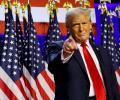
American President Donald Trump has announced imposing reciprocal tariffs on its major trading partners including China that levy higher import duties on goods shipped from the United States. He has already announced a 25 per cent duty on steel and aluminium imports, which will come into effect from March 12.

So vaccinate employees and families, staff at home, rickshaw drivers, milkmen, service providers, shopkeepers and street vendors, says Naushad Forbes.

A certain segment of the US pharma industry have become vocal about Indian policies on domestic content requirements and IPR.

The change of mind among Indian experts is based on a recent decision of the UK high court.
The government of Switzerland will not be taking up the allegation by Novartis that Indian patent law is incompatible with the Trade-Related Aspects of Intellectual Property Rights agreement at the dispute settlement board of the WTO.
While the innovators see data protection as an essential step to spur R&D, generics deem it as ploy to ensure monopoly by yet another name.
Let's look at the major provisions that will have lasting effect on the industry, both domestic and exports.
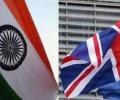
Negotiations for a trade deal between India and the UK have run into fresh controversy, after the proposals under a leaked chapter of the deal on intellectual property (IP) are believed to put access to affordable, lifesaving generic medicines from India at risk. According to the draft IP chapter put out by an international trade portal bilaterals.org, the UK is seeking continuous extension of patent period and rights through small tweaks in the drug, known as evergreening. This may prevent patents from expiring, impacting cheaper drug availability and its production by Indian generic drug manufacturers.
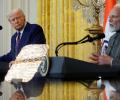
'But I don't think the government is in a great hurry to sign the BTA.'

Dispute over IPR was a bone of contention in bilateral ties till a couple of months ago.

India's IPR framework and enforcement were comparable to those in developed countries
Adverse IPR report expected this week;Poor labelling could take fight to WTO

Prime Minister Narendra Modi on Thursday called for reforming the World Health Organisation and streamlining its approval process for vaccines and therapeutics, and favoured making flexible the WTO's rules relating to trade-related aspects of intellectual property rights.
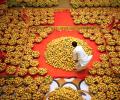
The Andhra Pradesh government is now the registered proprietor of the GI tag for the mango variety often hailed as "the king of fruits".

In 2010, Abbott acquired both the pharmaceutical business of Solvay, which had a presence in India, and Piramal Healthcare Solutions, which was part of Piramal Group.

India had been engaged in a contentious battle with the US over the issue, especially in the pharmaceutical sector.

Delegation visit ahead of patent law report.

The five-nation grouping BRICS on Tuesday resolved to combat terrorism in all its forms and manifestations, including the cross-border movement of terrorists, and vowed to step up joint efforts in building support for an India-backed global framework to effectively deal with the menace.

Prime Minister Narendra Modi on Saturday called for following a 'one earth, one health' approach to effectively deal with the coronavirus pandemic globally, and sought the support of the G7 grouping to lift patent protections for COVID-19 vaccines, during a virtual address at an outreach session of a summit of the bloc.
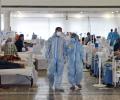
'Both the Centre and the states cannot say that they have been taking good care of public health.'
